If you’ve been invested in the stock market over the past few years, you may be accustomed to seeing a lot of green. Year-to-date through Labor Day, U.S. stocks are up nearly 14%, international stocks are up 15%, and emerging market stocks are up nearly 25%.
With global stocks having returned roughly 20% annually over the past three years, investors are naturally wondering: Can this keep going?
An all-time high can feel like a frozen ceiling, as though markets have climbed as far as they reasonably can. But remember, markets are expected to grow over time. As companies continue to provide goods and services to a growing global economy, their earnings grow as well. New market highs are a natural byproduct of that growth, fueling the long-term returns we seek.
That doesn’t mean stocks will continue climbing uninterrupted. Corrections, bear markets, and unsettling headlines are inevitable. The question is whether reaching a new high tells us whether a downturn is just around the corner.
While past isn’t prologue, the table below helps put that question into perspective. Historically, what occurs in the months after the market reaches a new high is remarkably similar to what happens after any other trading day. Whether measured from a record high or any other day chosen at random, the likelihood that the market is higher still is nearly the same. In other words, a new market high tells us surprisingly little about what’s next.
Should we invest at market highs?
The evidence since 1950
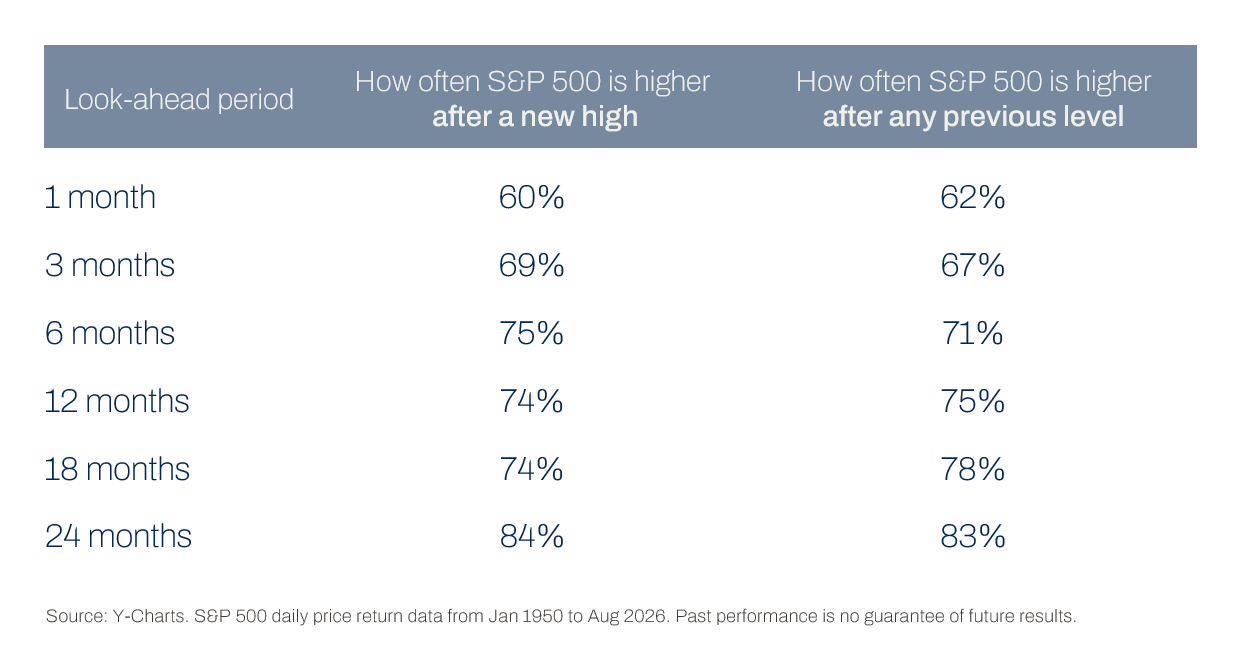
Record highs tend to arrive in clusters, not as isolated warning signs that a downturn is imminent. Consider that after U.S. stocks finally reached a new all-time high in March 2013 following the ’08-’09 Global Financial Crisis, roughly 242 additional record highs would be set before the next bear market began in March 2020.
That makes sense when we remember what investing is designed to accomplish. If markets grow over time, investors should expect to spend a meaningful amount of time at or near new highs. Being prepared to weather the occasional and painful downturn is also part of the experience.
Rather than trying to predict the next downturn, successful investors focus on what they can control: maintaining an appropriate mix of stocks and bonds, staying diversified, and keeping their personal goals—not the stock market’s current level—at the center of every investment decision.