Traditional investment management assumes that active managers can consistently beat the market — but evidence concludes otherwise. We take a different approach, helping you build a disciplined, balanced plan that guards against market hype and the pitfalls of performance-chasing.
Figure 1: Active fund underperformance rates vs. benchmarks: 2006–20251
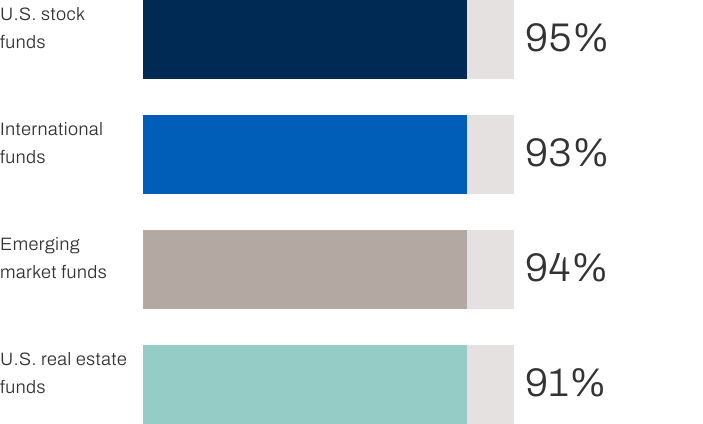
Source: S&P Dow Jones Indices. Percentage of active equity funds outperformed by benchmarks over 20 years. SPIVA ® U.S. Scorecard Year-End 2025.
What the numbers say — most active managers miss the mark
In highly efficient markets, stock and bond prices reflect most available information. This “pricing power” makes it hard for active fund managers to consistently predict which stocks will outperform. Over the 20 years ending in 2025, the results speak volumes.
Why patience outlasts prediction
Market timing, or trying to predict downturns and rallies, often backfires. Between 2015 and 2024, market timers earned 1% less annually than the funds they traded, leading to a $230,000 difference on a $1 million investment. Trading on emotions or gut instinct can disrupt the steady growth that comes from staying the course.
Figure 2: Active investor vs. fund performance: 2015–20241
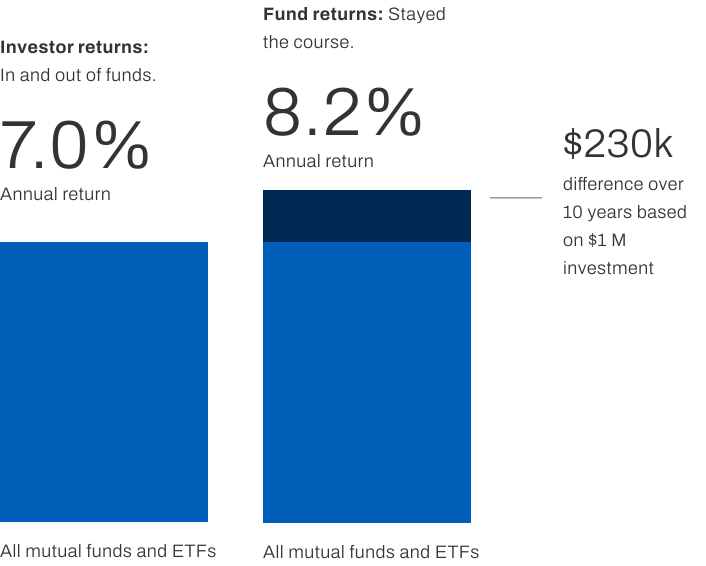
Source: Morningstar, Mind the Gap 2025 study. 10-year annualized return as of Dec 31, 2024. The study includes investor returns and total returns for both mutual funds and exchange-traded funds. Total returns are time-weighted total returns, weighted by asset size. Investor return is similar to IRR calculation, which is the constant monthly rate of return that makes beginning assets equal to ending assets with all monthly cash flows accounted for. Excludes commodities category group. Past performance is no guarantee for future results.

The evidence-based difference
We do things differently. Supported by Nobel Prize-winning research, our strategy builds strong portfolios rooted in broad market exposure and long-term thinking. Instead of chasing “winners,” we focus on:
• Market efficiency
• Low-cost, tax-efficient index funds
• Diversification (16,000+ securities)
• Tilt toward size, value, and profitability for higher expected returns
Building your portfolio with purpose
Our strategies are grounded in seven core principles, including strategic asset allocation, diversification, tax efficiency, and disciplined rebalancing. Portfolios include a mix of stocks, bonds, and real estate — spanning 46 global economies — for steady performance across various market cycles. Lower costs allow you to capture the lion’s share of the market return.
Figure 4: Example Vista Optimal Portfolio


Vista insights
Get to know our thinking and cut through Wall Street’s bias. No hype, just the straight truth.
The midterms and your portfolio: what history tells us
Stocks have advanced under Republican, Democratic, and mixed control of Congress. The evidence favors staying invested and diversified over reacting to elections.
Separately Managed Accounts: What they are and when they make sense
Separately managed accounts offer direct ownership of individual securities, which can create added tax-management opportunities for investors whose circumstances warrant it.
All-time high? Or just another Thursday?
New market highs can feel unsettling, as if stocks can’t climb any higher. But history shows something different. We look at the data, and why staying the course is key.

Complete and submit the information below, and we’ll be in touch to schedule an introductory call. Learn what to expect in our initial conversations >