Recent layoff announcements have intensified concerns about the impacts of artificial intelligence (AI). Meta plans to reduce its workforce by roughly 10%, Oracle has eliminated tens of thousands of jobs, and Block (Square) has cut headcount by nearly half. Many other well-known companies have taken similar actions, often pointing to increased adoption of AI.
It’s not surprising that fears of widespread job displacement are resurfacing — and raising questions about what it means for investors.
Over the past century, the U.S. economy has undergone multiple waves of technological change. While the unemployment rate has fluctuated over time, total employment has steadily risen, per the chart below. This suggests that although certain roles are eliminated, new ones are created. As technology advances, the composition of work evolves in ways that are difficult to anticipate in real time.
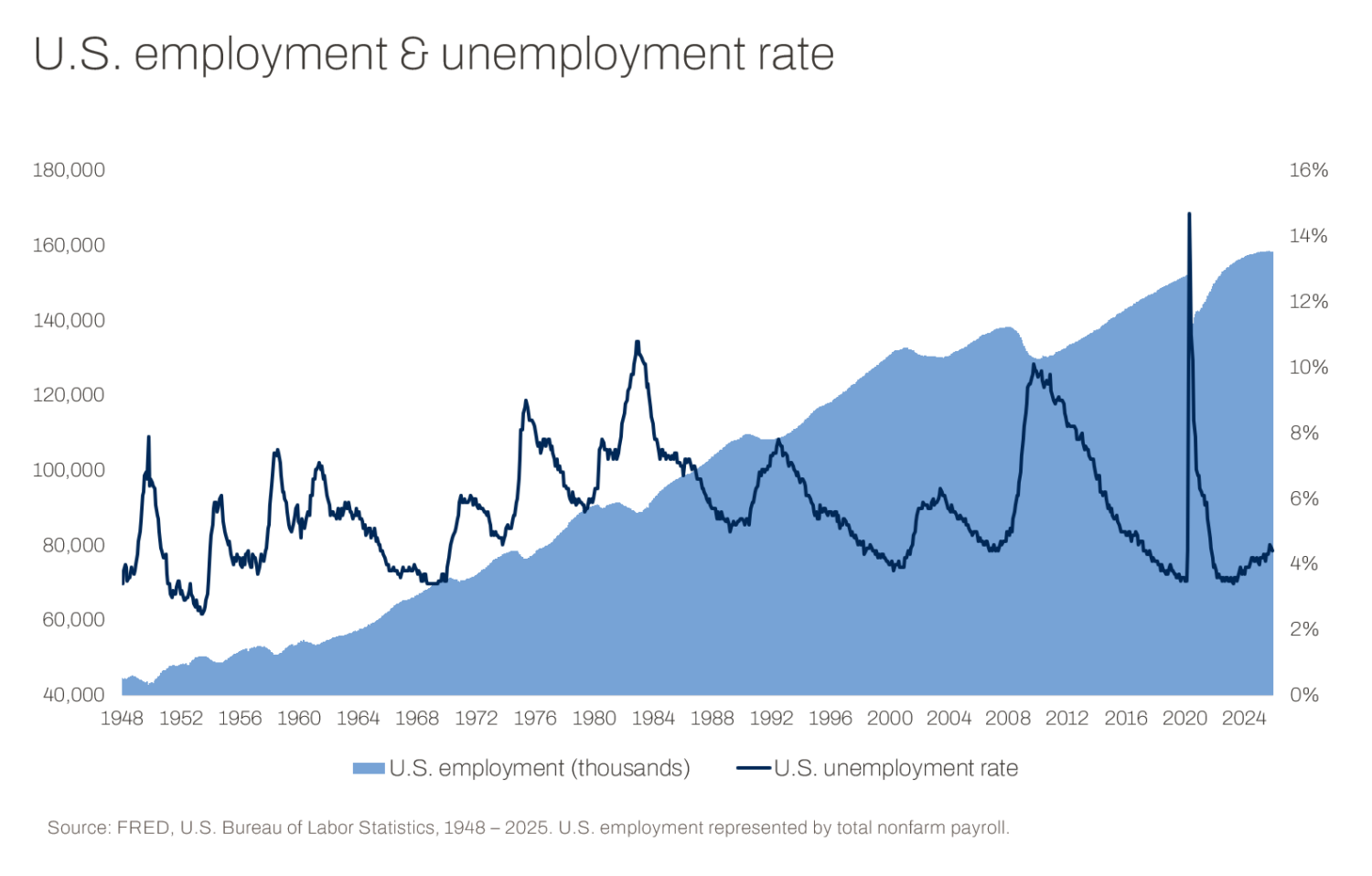
Consider that agriculture accounted for roughly 40–50% of U.S. employment in 1900, compared to less than 2% today. Entire industries, such as physical video rental, have largely disappeared as streaming platforms scaled. The phrase “gig economy” didn’t even exist just a few years ago. Between these endpoints lies a long history of disruption, adaptation, and job creation—each accompanied by periods of uncertainty and attention-grabbing headlines.
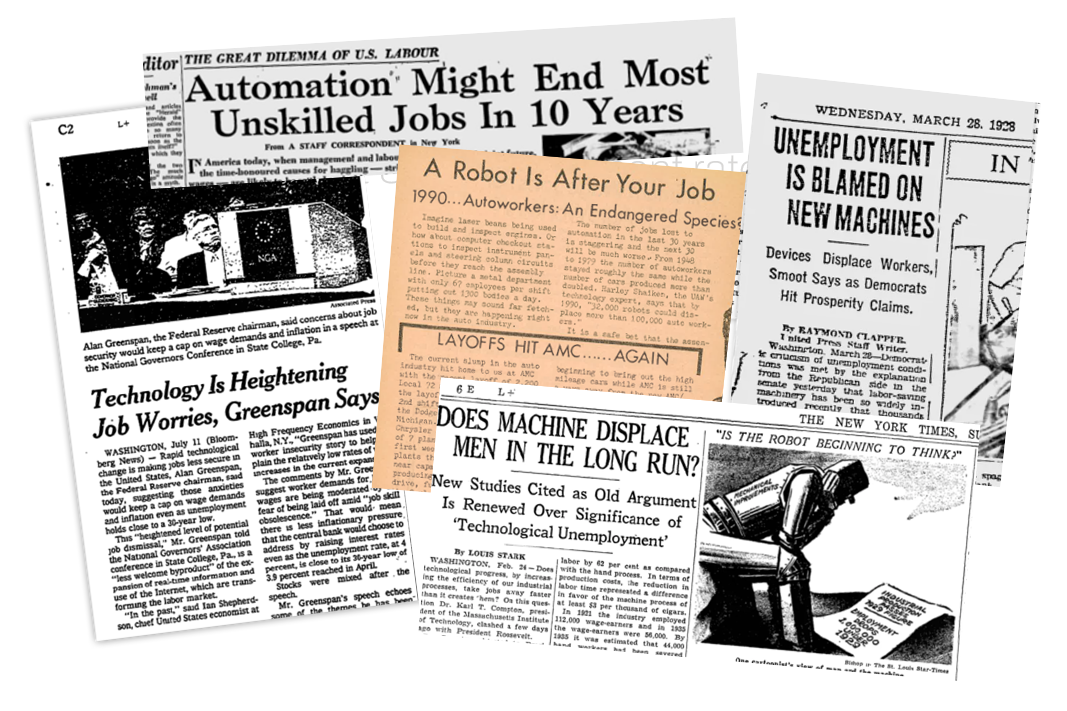
Throughout history, innovation has been an overwhelming positive force, driving productivity, corporate earnings, and stock prices higher. While technological change may create short-term disruption, markets are quick to adapt as capital flows to new opportunities.
The challenge investors face today is not accurately predicting which jobs will be replaced. It’s adhering to a disciplined, diversified approach that captures the significant benefits of global innovation while tuning out the noise.