Ah, the Magnificent Seven.
No, this isn’t a music review of 1980’s hit song by U.K. band The Clash, but rather a different perspective on the stock market’s current darlings: Apple, Microsoft, Alphabet (Google’s parent), Amazon, Nvidia, Tesla, and Meta (formerly Facebook).
These main stagers are riding high on the AI wave. The term “AI,” of course, stands for Artificial Intelligence, which has everyone from Wall Street to Main Street singing its virtues.
But is the Mag 7 collection of market giants a “Greatest Hits” album to be looped on repeat, or just another series of chart-toppers eventually to be dethroned?
Let’s crank up the volume and explore whether love is all we need for today’s star performers, or if we should be embracing a more diversified playlist.
The Dotcom Bust of the Late 1990s
Rewind to the late ‘90s when the market was jamming to the dotcom beat. The NASDAQ was hitting all the high notes, with America Online (AOL) at the center of the internet craze. Communication giants like Lucent Technologies, NTT, and Nokia—all top 10 stocks by market cap in 1999—never recovered. Some today might argue the 90’s dotcom darlings had more hype than profits, unlike today’s solid cash generators. So, are adoring fans of today’s hit acts justified in dancing to a different tune?
Not even the Nifty Fifty Continue to Rock around the Clock
The hits of the ‘60s and ‘70s may provide the better comparison. Remember the large and highly profitable Nifty Fifty stocks, including household names like Amex, Sears, Johnson & Johnson, GE, and McDonalds? Synonymous with “quality,” these stocks commanded lofty valuations, far exceeding the price investors were willing to pay for other stocks. Nearly universally seen as buy-and-hold-forever plays, a majority of these 70’s dancing queens were left stranded when the music (er, economy) all but stopped in the early 80’s. But, is this time different?
Will the Mag 7 Continue to Be the Champions of the World?
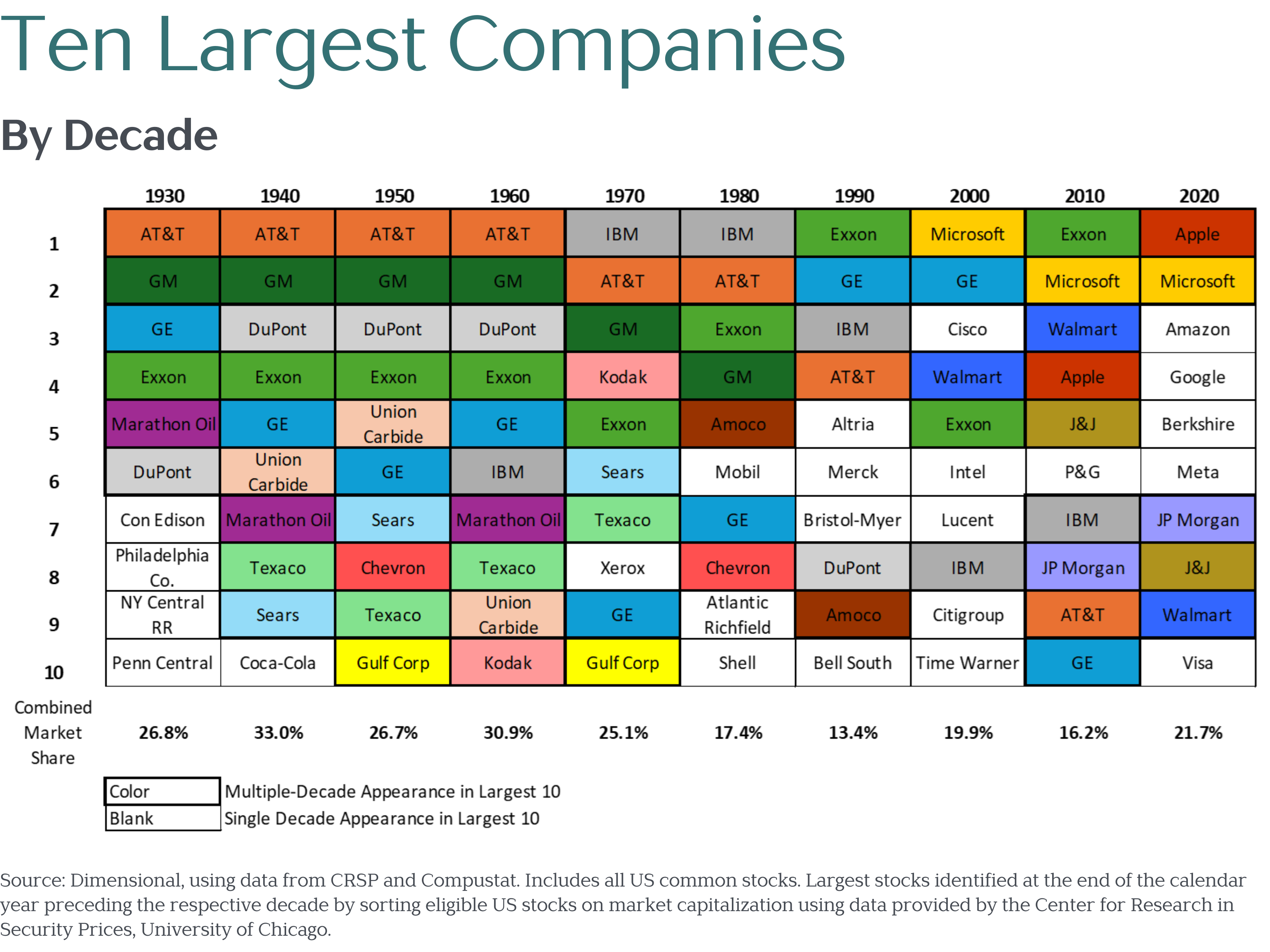
Innovation and technology are powerful forces in a global market-based system. But so is competition. Remember AT&T’s groundbreaking mobile service in 1946? How about Xerox’s revolutionary copier, and Intel’s unparalleled processors? Each of these companies was a heralded chart-topper in its heyday, yet found itself subject to intense competition and, ultimately, a stumble down the charts. Remarkably, half of the top 10 stocks from the ‘90s and 2000s didn’t remain one of the next decade’s greatest hits.
What we can learn from the stock billboard by decade
On the billboard below, the top ten stocks by market cap for each decade back to the 1930’s is displayed. Companies are color coded if they enjoyed a multi-decade run at the top; those outlined in white were one hit (er, decade) wonders.
What about the list of winners that did remain at the top? Not all enjoyed the lofty returns you might expect.
Microsoft, still a hit in its third decade as a top stock, has underperformed the overall U.S. market (as represented by the Russell 3000) for nearly two of the three decades it has been near the top.
What about blue-chip bellwether IBM, the biggest stock of the 70’s and 80’s? While IBM also remained a market giant, its stock underperformed the broader U.S. stock market by 5% per year in the 1980s and 90s.
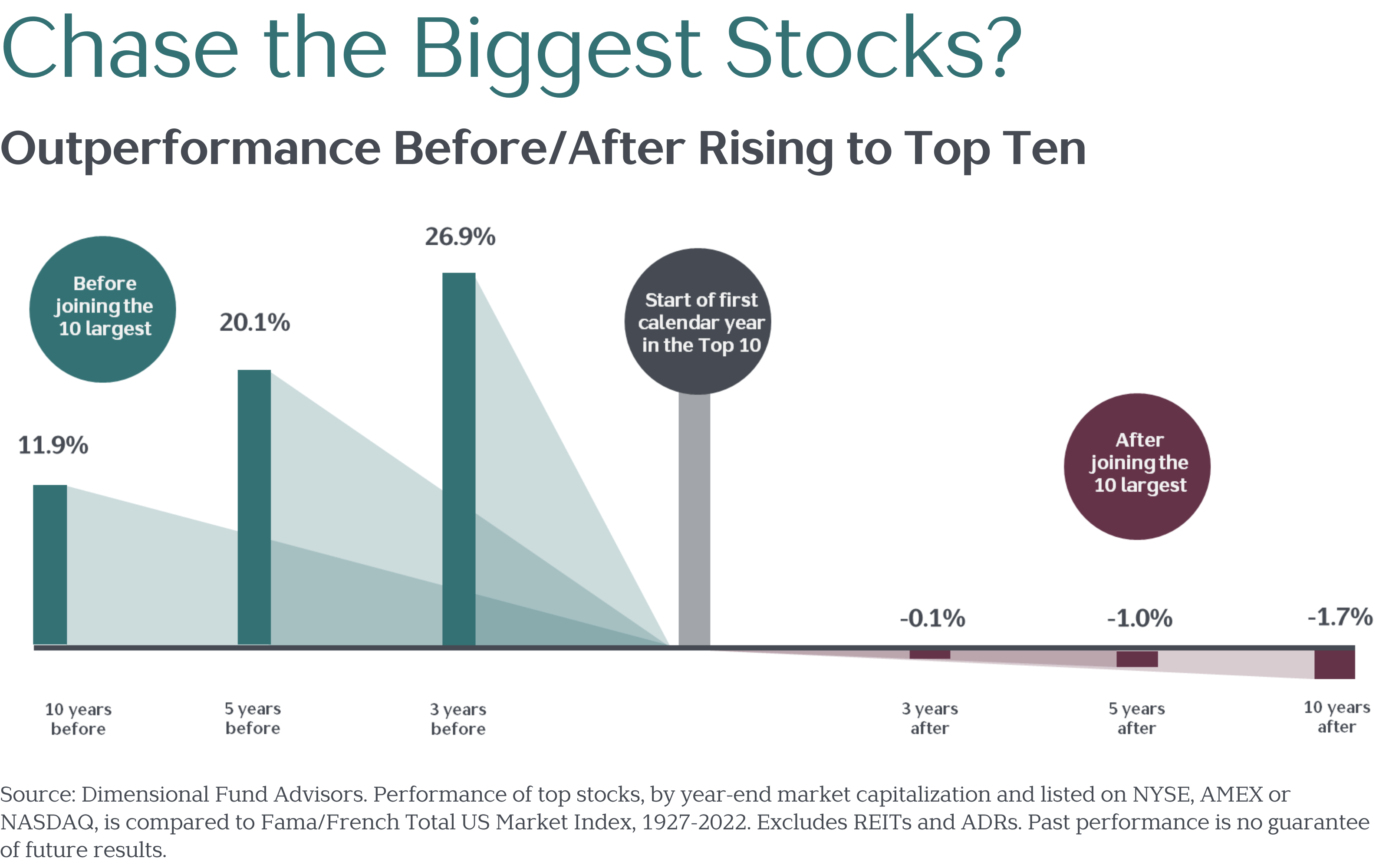
While these are just two examples, the larger evidence is consistently clear: after arriving at the top, the largest stocks have gone on to underperform the stock market, on average. Sure, extreme outperformance is a feature of all stocks headed for the top. But once there, they’ve had trouble repeating their past performance. MC Hammer, anyone?
Building that killer playlist
Diversification is like having a killer playlist with a mix of genres—you reduce the risk of getting bored (or wiped out).
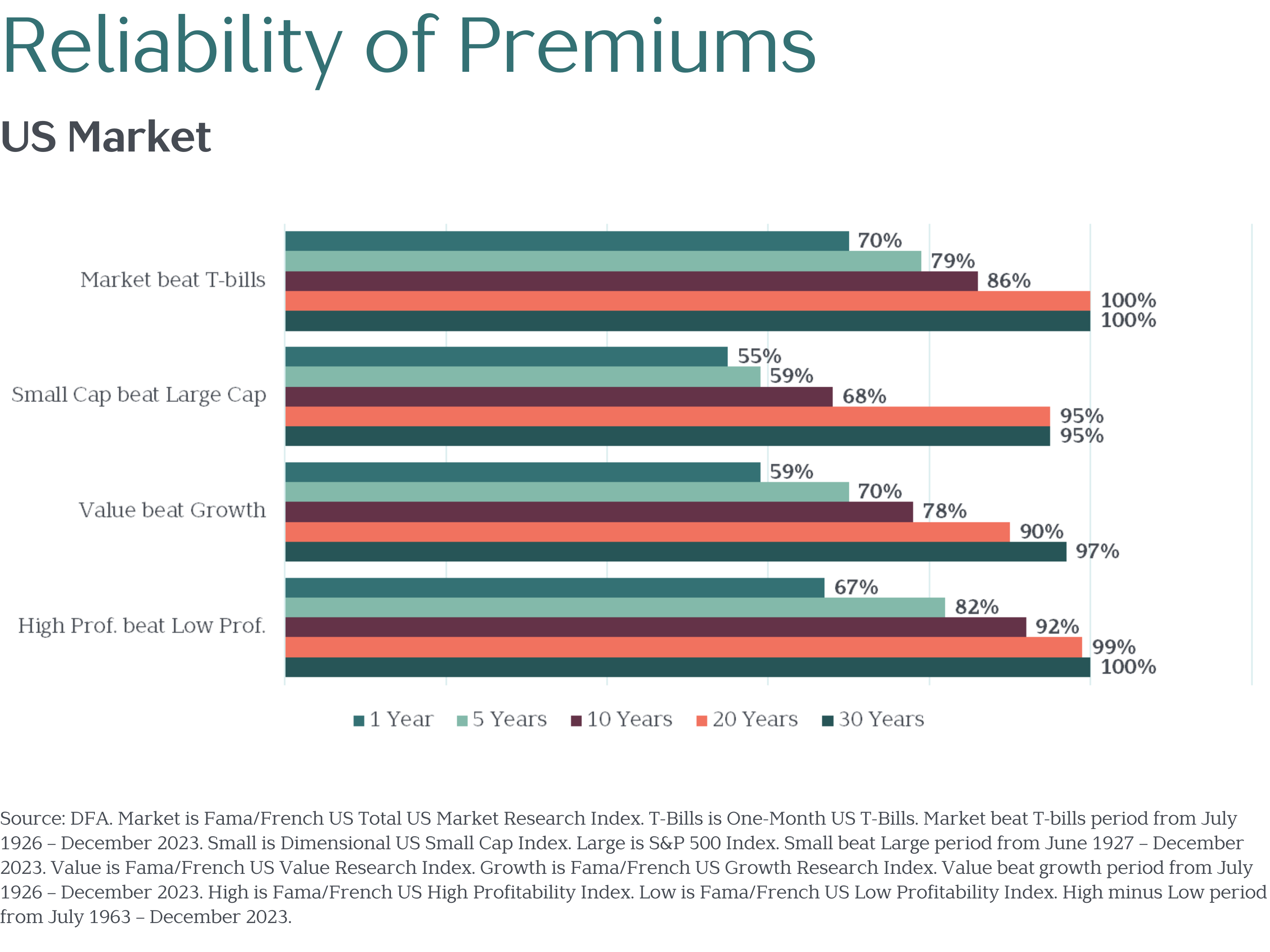
A diversified U.S. stock portfolio that includes small cap and value companies increases the probability of holding tomorrow’s winning stocks. And, while they may seem like a side act compared to today’s large cap stars, small cap and value companies have delivered higher long-term returns over time. And the longer the time period, the higher is the likelihood that small cap and value stocks have outperformed.
A Cruel Summer Ahead?
Looking beyond Taylor Swift’s reign might feel naïve, but even the biggest stars eventually step off the stage. The Magnificent Seven are today’s rockstars, but smart investors know small caps and value stocks more often play the anti-hero.
A diversified playlist doesn’t mean ignoring today’s legends entirely. It just means staying attuned to a wider array of performers, which likely includes tomorrow’s next big thing. That’s a hit that never gets old.