Portal
Let's talk
  • What we do
    • Wealth management services
    • Our approach
    • Working together
  • About us
    • Our team
    • Our company
    • Community engagement
    • News and events
  • Insights
  • Careers
  • Contact us
  • Portal login
  • Disclosures
The latest insights
  • The midterms and your portfolio: what history tells us
  • Separately Managed Accounts: What they are and when they make sense
  • All-time high? Or just another Thursday?

5 Ways to Handle Rising Long-Term Care Premiums

January 24, 2017
Author: Vista Capital Partners

Older long-term care insurance policies did not account for long periods of low interest rates. As a result, these policies have compensated by drastically increasing their annual premiums—often by 50% or more.  What do you do if a premium increase occurs?  Options vary by state and insurance company, but here are five possible choices:

1) Keep the policy, pay the new premium.

If it’s still affordable and you need the insurance, this is generally the most appealing option.  Why?  Even with the premium increase, your old policy will likely still cost much less than a newly issued policy with comparable benefits.

2) Keep the current premium, reduce the benefit period.

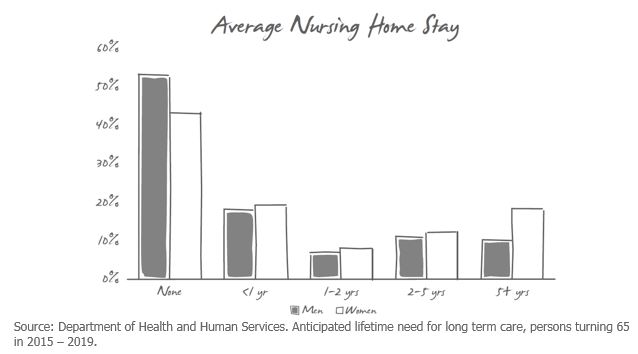
If the current benefit period is five years or longer, consider reducing it.  Why?  Data shows the average long-term care insurance claim is less than three years.  With the odds against a lengthy insurance claim, you may be paying for coverage you’ll never use.
5 ways

3) Keep the current premium, reduce the inflation rate.

If you’re in your 70s or 80s, consider reducing the inflation rate.  Why?  The policy has already benefited from inflation adjustments and, since you’re now closer to the point when a claim might occur, inflation is less of a risk.
If you’re in your 60s, be cautious about reducing the inflation rate.  Those in their 50s should avoid an inflation reduction as decades of rising healthcare costs could prove financially devastating.

4) Keep the current premium, reduce the daily benefit.

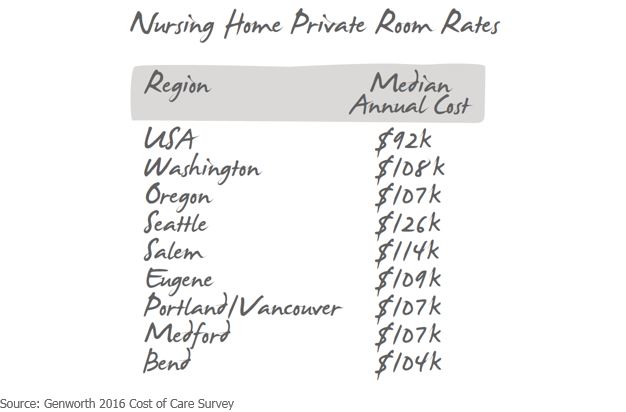
Short of canceling the policy, this is the option of last resort.  Why?  Most people only purchase enough insurance to cover the average cost of care.  Before reducing your daily benefit, compare your coverage to the current cost of care in your area. Keep in mind, these costs are for nursing home private room rates; costs for in-home care are typically higher.
5 ways 2

5) Cancel the policy.

Canceling the policy is most appropriate if your situation has changed and you no longer need the coverage. If you still need coverage but can’t afford the new premium, contact your insurer to see what other benefit might be reduced to maintain the policy.
You have more choices than simply paying the higher premium or canceling the policy.  Odds are one of the available options above will provide an acceptable level of coverage at a price you can afford.

Adapted from “5 Ways to Handle a Long-Term-Care Insurance Rate Increase” by Michael Kitces.  Journal of Financial Planning.  April 2013


Article tags
InsuranceRetirement

Related articles
Financial planning

Investing in a career: the expanding role of the 529 college savings plan

August 27, 2026By Whit Peters

529 plans now cover more than college — trade school, apprenticeships, grad school, and professional credentials. See how the flexibility can play out in practice.

Financial planning

529 plans turn 30: still the smartest way to save for college

June 19, 2026By Rob Greenman, CFP®

Tax-free growth and consistent contributions can turn into significant college savings.

Financial planning

What The “One Big Beautiful Bill Act” Means For You

ArticleNovember 24, 2025By Jon Gannon, CFP®

This past summer, Congress passed the One Big Beautiful Bill Act (OBBBA)—an ambitious name for a law that brings something surprisingly practical: stability.

Subscribe to agenda-free news, tips, and analysis, delivered to your inbox.

This field is for validation purposes and should be left unchanged.
  • Legal Disclosures
  • Form CRS
  • Client Portal
  • Cookie Policy
  • Legal Disclosures
  • Form CRS
  • Client Portal
  • Cookie Policy
  • Legal Disclosures
  • Form CRS
  • Client Portal
  • Cookie Policy
Contact us
© Vista Capital Partners 2026. 100% employee-owned.
Manage Consent

We use cookies to track website performance. View our Privacy Policy for details.

Functional Always active
The technical storage or access is strictly necessary for the legitimate purpose of enabling the use of a specific service explicitly requested by the subscriber or user, or for the sole purpose of carrying out the transmission of a communication over an electronic communications network.
Preferences
The technical storage or access is necessary for the legitimate purpose of storing preferences that are not requested by the subscriber or user.
Statistics
The technical storage or access that is used exclusively for statistical purposes. The technical storage or access that is used exclusively for anonymous statistical purposes. Without a subpoena, voluntary compliance on the part of your Internet Service Provider, or additional records from a third party, information stored or retrieved for this purpose alone cannot usually be used to identify you.
Marketing
The technical storage or access is required to create user profiles to send advertising, or to track the user on a website or across several websites for similar marketing purposes.
  • Manage options
  • Manage services
  • Manage {vendor_count} vendors
  • Read more about these purposes
View preferences
  • {title}
  • {title}
  • {title}